
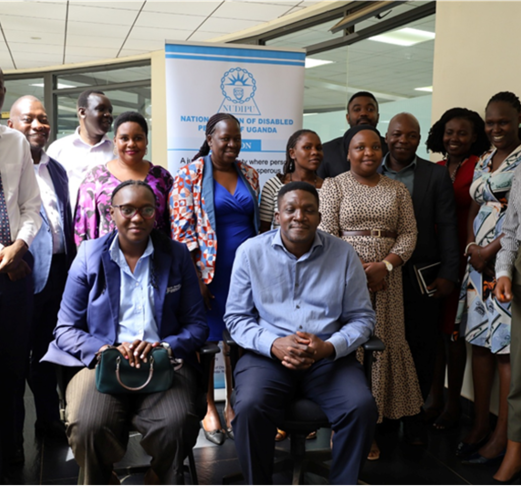
Climate change disproportionately affects persons with disabilities, yet their needs and capacities have historically been overlooked in many climate policies and programs. Recognizing that sustainable climate action cannot be achieved without inclusion, the National Union of Disabled Persons of Uganda (NUDIPU) set out to influence Uganda's climate governance framework to ensure that persons with disabilities are no longer left behind.
In 2025, with support from our partner Norwegian Association of Disabled (NAD), NUDIPU embarked on a strategic policy engagement process with the Ministry of Water and Environment and other government Ministries, Departments and Agencies responsible for climate change and disaster risk management. NUDIPU reviewed existing climate-related policy and legal frameworks and highlighted critical gaps in disability inclusion, like lack of provisions for their meaningful participation in climate interventions and lack of disability-disaggregated data collection.
Government institutions acknowledged these gaps and expressed commitment to strengthening disability inclusion. The Commissioner responsible for Climate Change at the Ministry of Water and Environment advised that while legislative and policy reforms often require considerable time, an immediate opportunity existed through the development of the National Climate Change Gender Strategy and Action Plan 2025–2030. The Ministry invited NUDIPU to participate in the drafting and review process, recognizing the organization's technical expertise in disability-inclusive climate action. As a result, disability inclusion was integrated across multiple strategic priorities of the National Climate Change Gender Strategy and Action Plan 2025–2030 rather than being treated as a standalone issue.
The Strategy now recognizes persons with disabilities among the priority groups for climate action and includes commitments to:
-
Promote the meaningful participation of persons with disabilities in climate change planning, implementation and decision-making.
-
Improve access to accessible and inclusive early warning systems.
-
Strengthen disability- and gender-responsive climate change adaptation measures.
-
Promote disability-inclusive disaster preparedness, accessible evacuation procedures and inclusive emergency response mechanisms.
-
Ensure representation of persons with disabilities within community disaster risk management structures.
-
Improve equitable access to climate finance and climate-related resources.
-
Strengthen the capacities of government institutions and stakeholders on disability-inclusive climate action.
-
Collect disability-disaggregated data and monitor inclusion outcomes to support evidence-based planning and accountability.
-
Track whether climate interventions effectively reach marginalized populations.
-
Expand climate-resilient livelihood opportunities, green jobs, skills development, entrepreneurship, financial inclusion and access to productive resources for women and persons with disabilities.
This achievement represents more than the inclusion of disability-related language in a national strategy. It reflects a shift in how government approaches climate action – recognizing persons with disabilities not merely as beneficiaries of support, but as active contributors to building resilient communities. By influencing a national policy framework that will guide climate programming over the next five years, NUDIPU has helped establish a stronger foundation for equitable climate investments, inclusive disaster risk reduction, and climate-resilient livelihoods across Uganda.
NUDIPU will continue working alongside government, organizations of persons with disabilities, development partners and local communities to ensure that the commitments contained in the Strategy translate into tangible improvements in the lives of women, men, girls and boys with disabilities who are increasingly affected by climate change.
